Understanding how users refine their searches and move between related topics is one of the most overlooked, yet powerful, dimensions of semantic keyword research. Every search journey is a trail of evolving intent that search engines analyse to understand not just what people are looking for, but how they get there. These journeys reveal intent transitions, topic relationships, and behavioural signals that Google uses to evaluate content relevance and structure the results we see every day.
In this blog post, we’ll explore two key concepts that help decode that story: search query sequence and query path. We’ll look at how Google observes and learns from these query patterns, how they shape SERP features like People Also Ask and People Search Next, and how you can incorporate this understanding into your own semantic keyword research process.
What is a search query sequence?
Every time you perform multiple searches in a session, Google analyses the semantic proximity of those queries to one another. If your searches are closely related — structurally, thematically, or semantically — Google groups them into an established sequence.
For example:
- home gym all-in-one equipment
- home gym beginner equipment
- home gym cardio equipment
These form a coherent query sequence, showing progression from broad to specific information needs.
If one of your searches diverges completely from the previous topic (e.g., “best Thai restaurants near me” in the middle of fitness research), Google may simply start a new sequence or ignore the unrelated query altogether. Over time, the patterns of millions of similar user journeys train Google to recognise and prioritise semantically close queries, reinforcing their relationship in search understanding.
Why search query sequences matter in modern SEO
In the world of semantic search, queries are rarely isolated. Google doesn’t just look at a single keyword — it studies the sequence of queries performed during a user’s session to understand intent evolution, topic proximity, and eventual satisfaction with the result.
When many users perform similar query progressions, Google begins to tie those queries together semantically, reinforcing their relationship in the knowledge graph and SERP features.
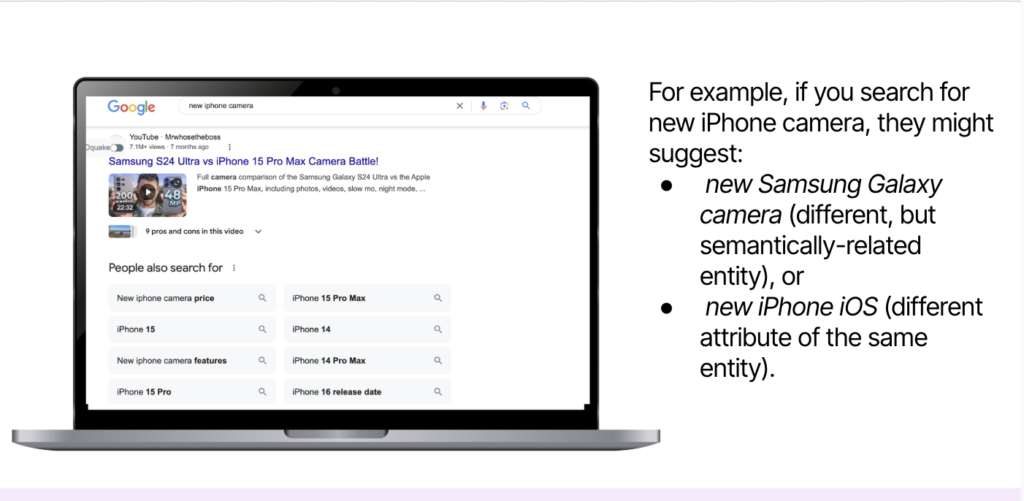
This is how Google learns that searches like:
- “new iPhone camera”
- “new Samsung Galaxy camera”
- “iOS vs. Android”
…often belong to a common search journey around a customer buying a new phone. The system uses this aggregated behavioural data to shape what users see next.
How Google uses query sequences to enrich SERPs
When Google detects recurring query patterns, it leverages that insight to enrich the SERP experience. These enhancements not only improve user satisfaction but also extend engagement time on Google’s results pages — a critical factor for ad visibility and retention.
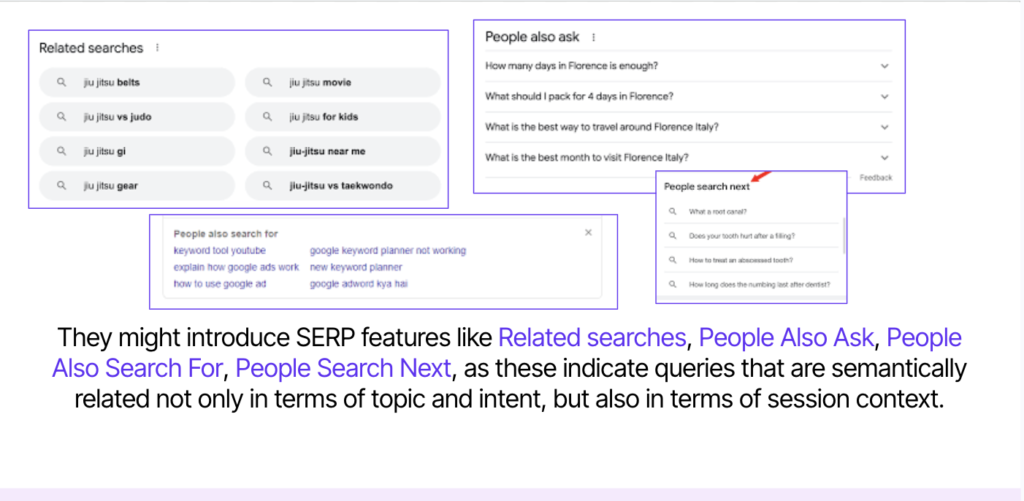
You’ll see the impact of this learning in features like:
- People Also Ask — questions semantically related to the current query
- Related Searches — thematically connected queries appearing at the bottom of SERPs
- People Also Search For — queries triggered when a user returns to the SERP after visiting a result
- People Search Next — the next query Google anticipates based on session patterns
Each of these features represents semantic links between queries that are not just topically similar but sequentially connected in real user journeys. By surfacing these, Google both satisfies user curiosity and encourages further exploration — keeping searchers within its ecosystem longer.
Patent context: session-based query suggestions
This mechanism is not speculative — it’s grounded in Google’s own patent filings. US Patent 9,104,764 (“Session-based query suggestions”) describes a system that identifies sessions based on sequential queries from the same user and then suggests follow-up queries based on what previous users with similar session patterns searched for next. The patent explicitly describes how relationships between queries are identified based on similar terms or similar results within a session.
Bill Slawski, the late SEO pioneer and patent analyst behind SEO by the Sea, was among the first to analyse these patents for SEO practitioners. His article “Search Engines Learn From Search Query Sequences” (2008) broke down one of the earliest patents in this space and remains essential reading for anyone wanting to understand the foundational mechanics behind query suggestions, related searches, and how Google builds semantic relationships from user behaviour at scale. His companion piece on “Context Clusters in Search Query Suggestions” further explored the role of session context in determining which query suggestions appear.
What is a query path?
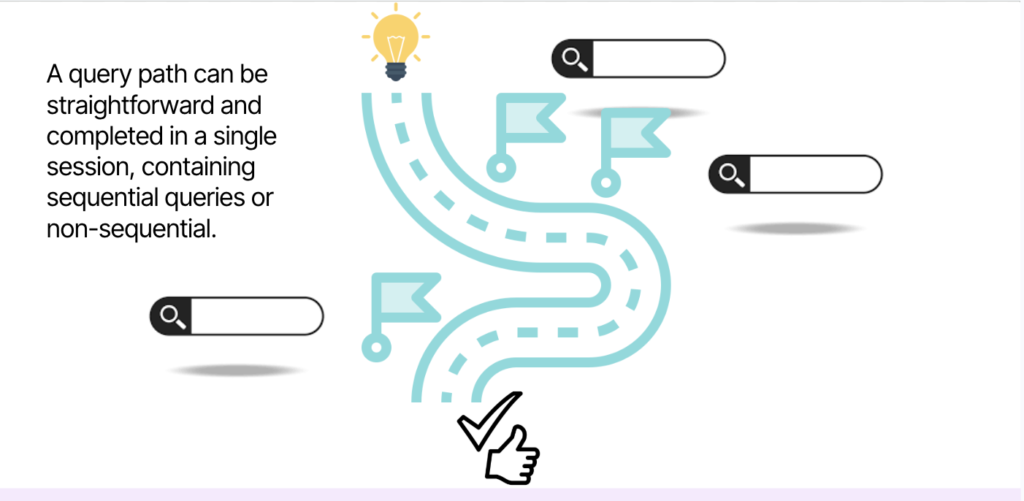
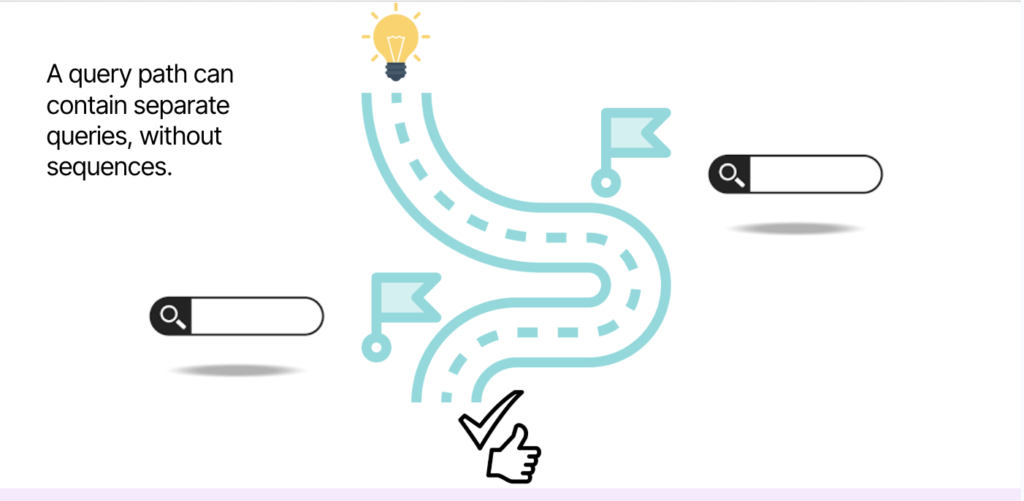
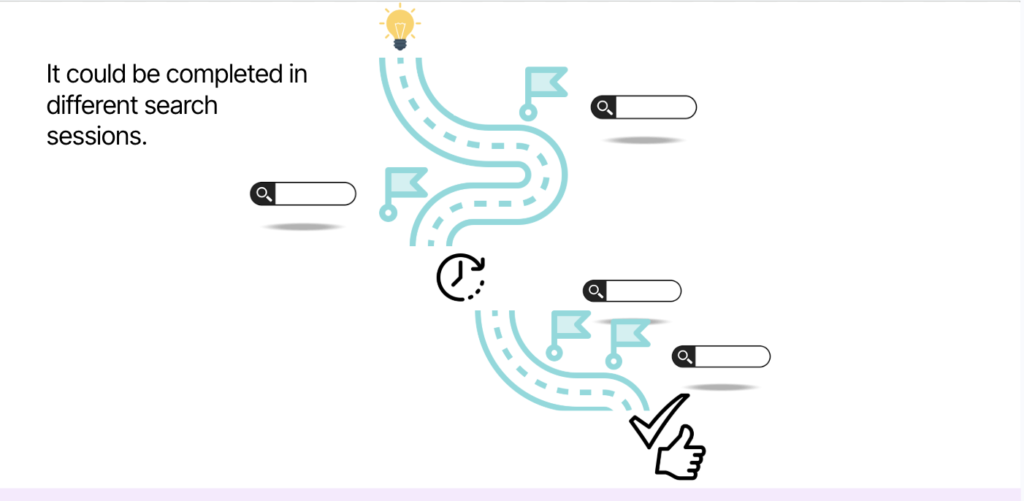
While a query sequence focuses on the order and relationship of individual searches within a session, the query path represents the entire journey a user takes to fulfil their intent — sometimes spanning multiple sessions. A query path might include:
- Sequentially related searches (within one session)
- Non-sequential but topically connected searches (across sessions)
- Cross-device or cross-platform searches that continue the same task
For instance, a query path for a user planning a trip could look like this:
- best destinations in Italy
- cheap flights to Rome
- where to stay in Trastevere
- local food tours Rome
These individual sequences collectively form a query path that reflects a clear progression, and it can be completed across different sessions.
What influences a query path?
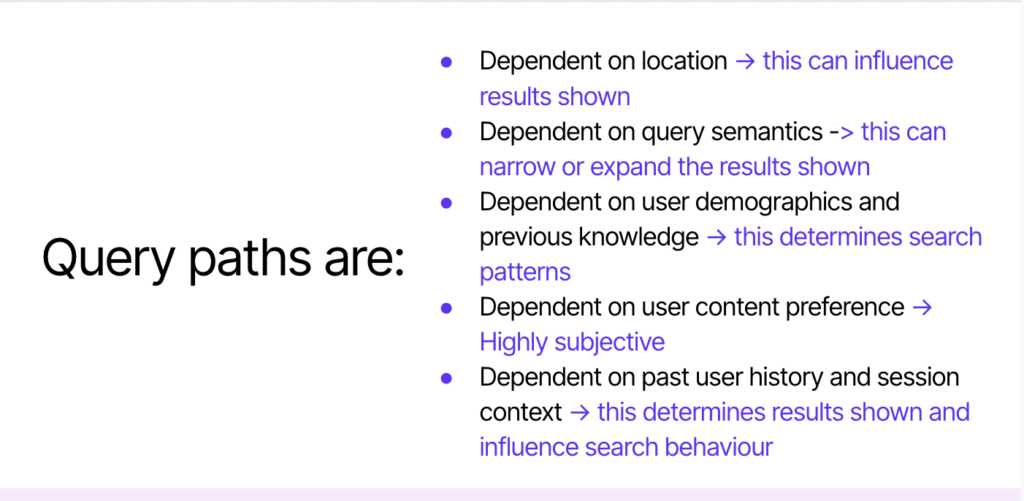
Query paths are shaped by a combination of semantic, behavioural, and contextual factors that influence how users move through their search journeys.
Location plays an important role in determining which results are prioritised and how they vary from one region to another. A user searching for “best coffee shops” in London will naturally see a different set of results than someone searching for the same query in Melbourne.
Query semantics also guide how the path unfolds. Depending on how a user refines their phrasing, their journey may narrow into a more specific subtopic or broaden to explore related themes.
User demographics and prior knowledge further affect this progression. Someone new to a topic will likely perform more exploratory queries before reaching a decision, while an experienced user might move directly to comparison or purchase-related searches.
Content preference determines the type of media a person chooses to engage with — whether they prefer reading in-depth articles, watching tutorials, or scanning visuals.
Past search history and session context influence how Google interprets intent, adjusting which results appear and how the user interacts with them.
For SEOs, recognising these layers of influence helps you structure your content clusters and internal linking in ways that mirror real user progression — meeting people where they are in their discovery process and guiding them naturally toward conversion.
How this applies to AI search systems and LLMs
Understanding query sequences and paths is no longer just about traditional Google SERPs. As AI-powered search tools like ChatGPT, Perplexity, and Google’s AI Mode reshape how users find information, the principles behind query sequences become even more relevant.
LLMs don’t simply match keywords — they predict the goal behind a query. When a user interacts with an AI chatbot, their conversational turns mirror query sequences: each follow-up prompt refines intent, narrows scope, or pivots to an adjacent topic. Research has shown that this “incremental intent revelation” across conversational turns is structurally similar to traditional query sequences but happens within a single interface rather than across separate searches.
A particularly important mechanism in AI search is query fan-out — where a single user prompt is expanded into dozens of related sub-questions behind the scenes. For example, a prompt like “Notion vs Trello” might trigger internal sub-queries about team collaboration, pricing, integrations, and ease of use. This is essentially an automated, instantaneous version of the query path that a user might manually perform across multiple traditional searches.
What does this mean for content creators? The content that gets cited by LLMs tends to be modular, answer-first, and structured around specific micro-intents. Rather than writing one monolithic page about a broad topic, think about how your content addresses the individual steps along a query path. Each well-structured section that clearly answers a specific sub-intent becomes a candidate for extraction by AI systems.
Additionally, the click you earn from AI search traffic is no longer the user’s first interaction with your topic — they’ve already consumed an AI-generated synthesis. Your landing pages need to assume a higher baseline of knowledge and deliver deeper value, whether that’s original data, expert frameworks, interactive tools, or nuanced comparisons that go beyond what an LLM can synthesise from existing sources.
How to practically research and identify query sequences and paths in your keyword research
Understanding query sequences and paths in theory is only half the story. To make them actionable in your SEO strategy, you need methods to identify, analyse, and apply these patterns to real keyword data.
The following approaches combine data-driven techniques and user insights that help you visualise query relationships, map user intent evolution, and design content clusters that reflect real search behaviour.
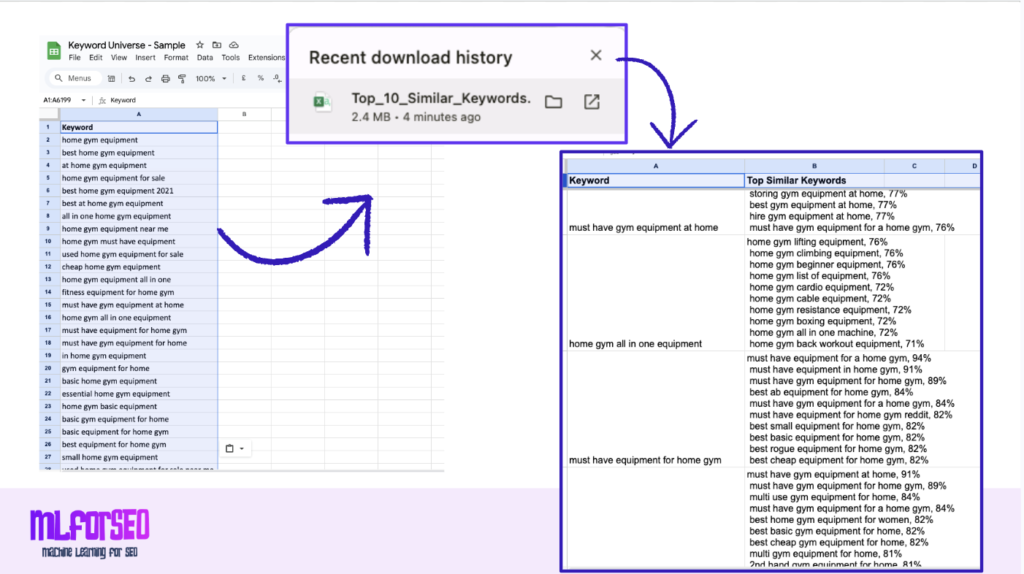
Approach 1: Using fuzzy matching to calculate query distance
One practical way to identify potential sequential or semantically related queries is through fuzzy matching. This method calculates query distance — a measure of how similar two queries are in meaning or structure.
By running fuzzy matching across your entire keyword universe (including competitors), you can:
- Detect near-duplicate or semantically approximate terms
- Group them into thematic clusters
- Visualise relationships between keywords for content planning
For example, for the term home gym all-in-one equipment, fuzzy matching may surface:
- home gym beginner equipment (92% similarity)
- home gym cardio equipment (89%)
- compact home gym machine (85%)
These don’t just show similarity — they hint at possible sequential intent (research → comparison → selection). Having terms that are similar doesn’t mean they are necessarily sequential or part of a single path, but they might be — and it’s worth analysing whether they could be.
You can perform this type of analysis on your ranked keywords, internal site searches, competitors’ ranked keywords, and your broader keyword universe of opportunity terms. Experiment with this analysis using MLforSEO Google Colab notebooks or your own keyword list spreadsheets.
Approach 2: Reverse-engineering SERPs for sequential features
Another powerful method for uncovering query relationships is to reverse-engineer the Google SERPs and observe where Google itself is surfacing sequential or semantically related information. This approach doesn’t require access to proprietary data — it relies on what’s already visible to anyone who searches. What you’re doing here is essentially reading the SERP as a dataset.
Why it works
Google’s results pages are rich with clues about how the search engine perceives query proximity and sequence. Features like People Also Ask, Related Searches, People Also Search For, and People Search Next are all generated from aggregated user behaviour. They represent common query transitions that occur within the same session or across multiple sessions by users exploring the same topic.
By analysing these patterns at scale, you can reconstruct the pathways users most commonly take from one search to another — essentially mapping Google’s understanding of sequential intent.
Here’s how:
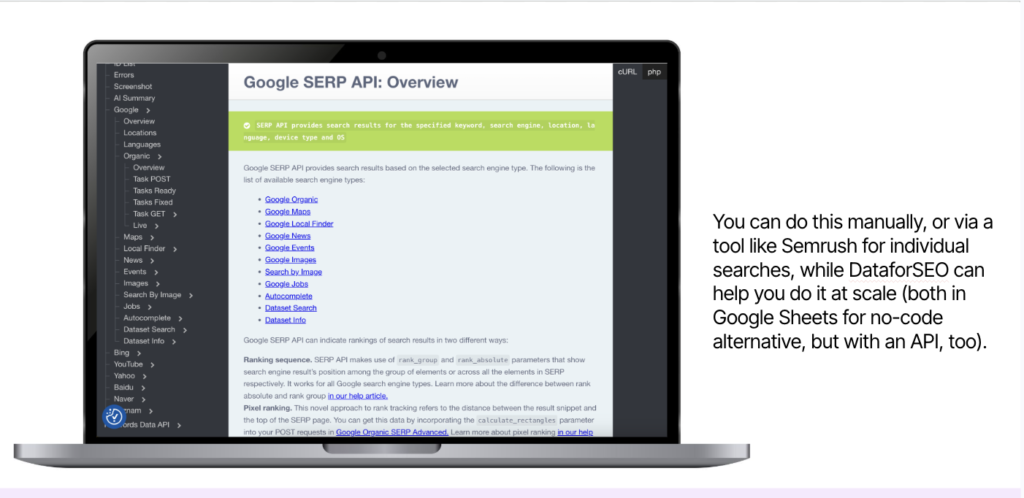
- Scrape SERP data for your priority keywords using DataForSEO or similar APIs.
- Identify sequential SERP features — where features like People Also Ask or People Search Next appear. You might use the Pemavor free autocomplete tool as a no-code alternative.
- Analyse recurring patterns and topic transitions across your keyword set.
- Expand those sequences via Google Autocomplete to capture additional variations.
This method reveals how Google already connects topics, giving you real-world data on query adjacency and intent evolution that you can mirror in your content strategy.
Approach 3: Combining entity and n-gram analysis
Another effective way to deepen your understanding of query relationships is to combine entity extraction with n-gram analysis. These two methods work hand in hand to help you uncover how searchers naturally combine important terms and phrases in their queries.
Entity extraction helps you identify who or what your content is about — the real-world concepts like people, brands, products, or topics that users mention most often. N-gram analysis, on the other hand, focuses on how those entities appear together in language, by breaking text or keyword data into recurring word patterns of a chosen length (bigrams, trigrams, etc.).
When combined, these two analyses reveal semantic co-occurrence — how users express intent around a topic and which phrases consistently form part of their search journey. For example, suppose your extracted entities include iPhone, Samsung Galaxy, and camera. Running an n-gram analysis across your keyword universe might show common trigrams such as how to fix, best tutorial for, or review of.
When you merge these, you uncover real-world query constructions like:
- how to fix iPhone camera
- best tutorial for Samsung Galaxy camera
- review of iPhone camera features
In practice, this process lets you:
- Detect frequent entity-attribute-variable combinations (e.g., product + feature + problem)
- Identify patterns of modification, such as “how to”, “best for”, or “near me”, that indicate the stage of intent
- Recognise content opportunities where users expect specific solutions or comparisons, but few results exist
When you integrate this entity-n-gram mapping into your keyword research workflow, you begin to see clusters of meaning rather than isolated terms. You can then prioritise topics based on which entity-intent combinations appear most often or most closely align with your target audience’s needs.
Approach 4: Conducting user research to map query paths
While data-driven methods like fuzzy matching or SERP scraping can reveal large-scale query relationships, they can’t always explain why users search the way they do. To truly understand the intent and emotion behind those sequences, you need to complement quantitative analysis with qualitative user research.
By directly engaging with your audience — through interviews, surveys, and persona mapping — you can uncover the real motivations, decision patterns, and phrasing that shape their query paths. These insights help you design content that doesn’t just rank, but actually mirrors how users think, search, and decide.
User interviews
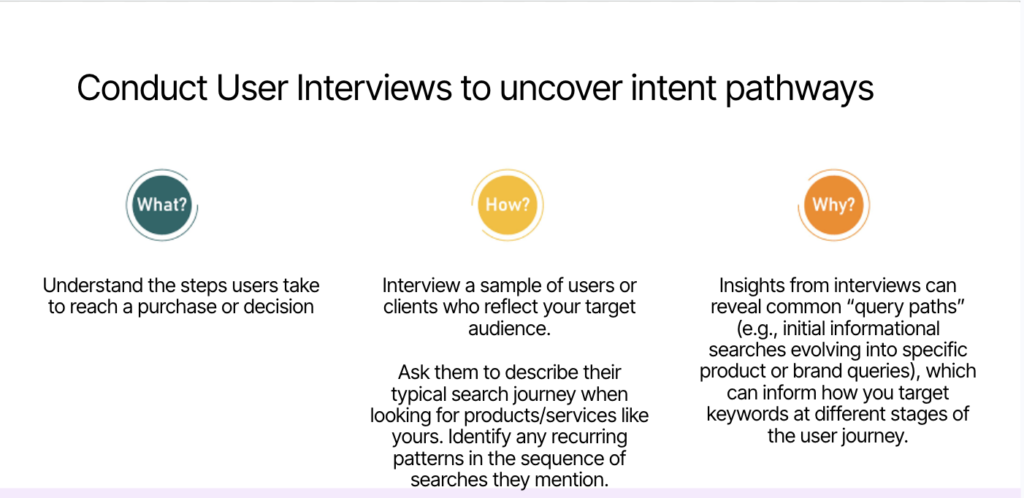
Interview a sample of users who match your target audience. Ask them to describe how they search before making a purchase or reaching a decision. Look for recurring query sequences — these insights translate directly into structured keyword maps that follow real search journeys.
Surveys for query path discovery
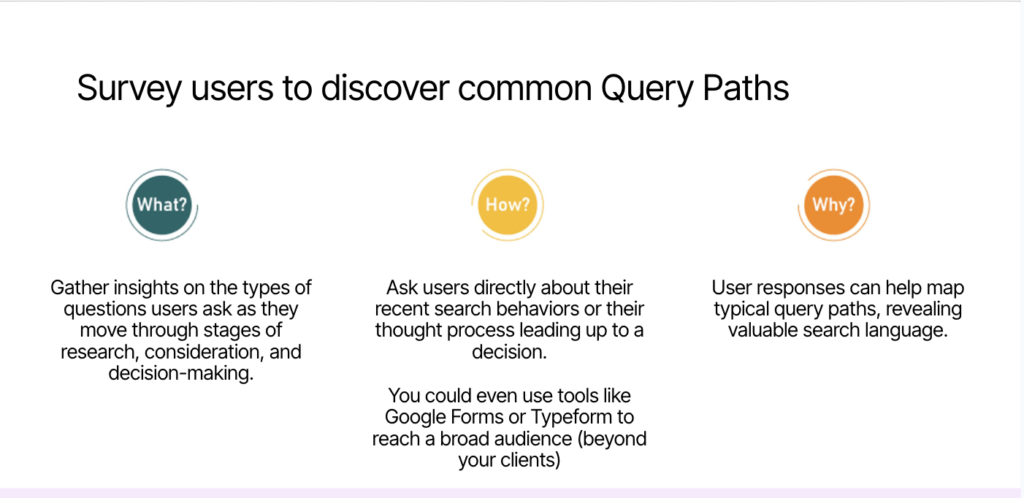
Surveys can scale this process. Ask respondents to outline their recent search journeys and the questions they asked along the way.
This data helps you:
- Detect common query transitions
- Uncover the language users actually use
- Prioritise content for different intent stages
Mapping personas with query sequences
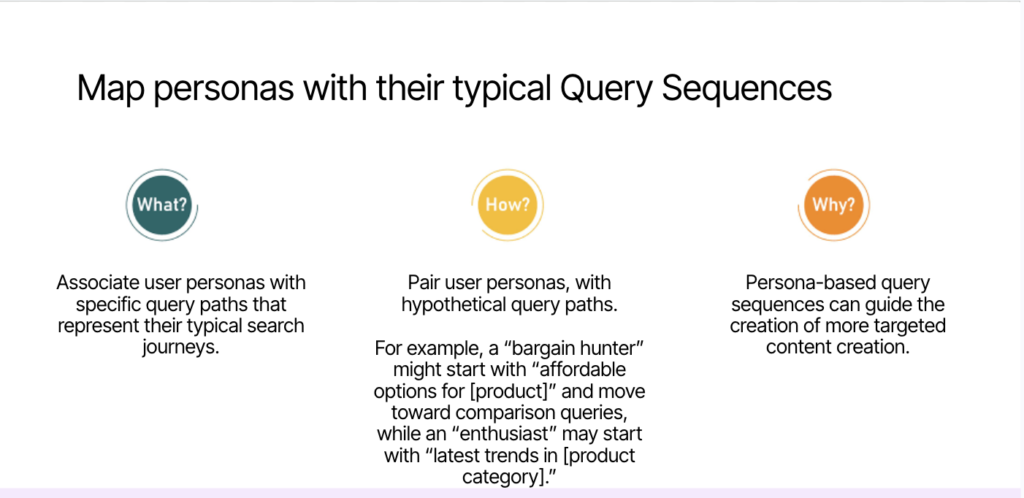
Associate each persona with typical query patterns that match their behaviour and motivations. For example:
- Bargain Hunter Persona: “affordable options for…” → “X vs Y comparison” → “best deals on…”
- Early Adopter Persona: “latest trends in…” → “new model release date” → “hands-on review”
This exercise helps you tailor tone, format, and product emphasis for each user group.
Additional data sources to consider
Don’t limit yourself to search data alone. Google Trends, chat and call transcripts with users, and help desk or customer service transcripts can all reveal common entities, pain points, and questions that tie directly to products or services. Sentiment analysis applied to these transcripts can quickly surface what to prioritise.
Approach 5: Analysing cross-platform query paths
Modern search behaviour doesn’t happen in isolation — it happens across multiple platforms, each serving a different purpose in the user’s decision-making process. Users no longer rely solely on Google to complete a task. Instead, they navigate between search engines, social platforms, and content ecosystems depending on where they are in their journey.
This means that when you think about query paths, you also need to think beyond Google. Each platform captures a different moment in that path — from initial inspiration to post-purchase validation — and each favours distinct content types and query patterns.
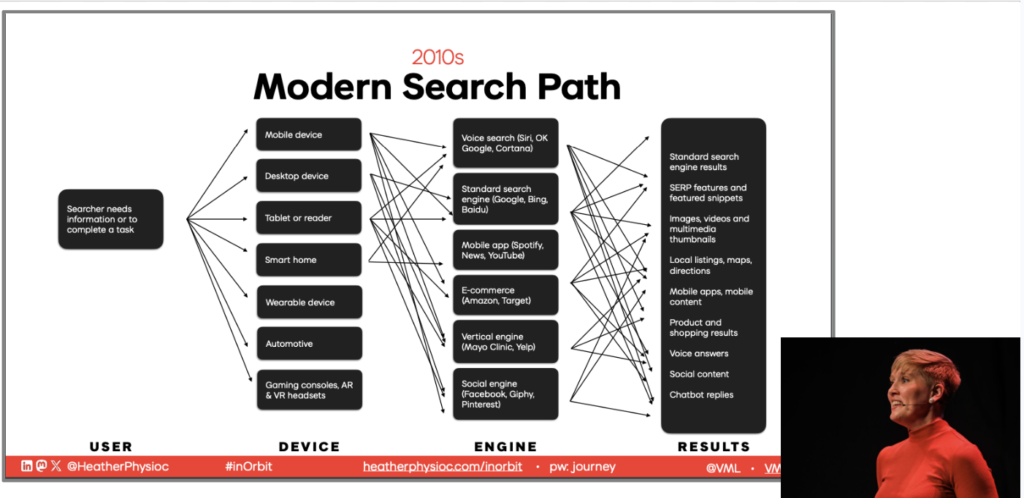
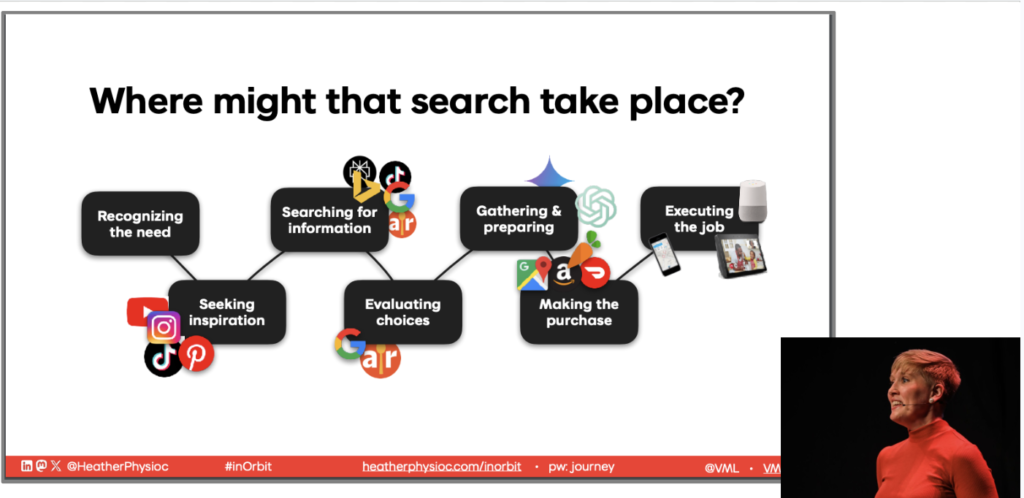
What this means for SEOs is that the query path no longer flows linearly; it’s cross-platform and cross-content. Each stage connects a query, a platform, and a content format — together forming a complete query path that spans both discovery and decision-making.
To make use of this insight, start by identifying which platforms your audience uses most frequently. A tool like SparkToro can help, or you can manually infer it by analysing which content formats and platforms dominate your niche’s SERPs. From there, classify each platform according to its search purpose — for example, is it more inspiration-driven, information-driven, or conversion-driven?
Then, for each important keyword, run a SERP analysis to tag:
- The dominant platform where it appears (Google, YouTube, TikTok, etc.)
- The content type most commonly surfaced (video, image, article, short-form)
- The intent stage it represents (inspiration, research, evaluation, or purchase)
You can then map these facets of search terms to patterns for each platform, here are examples:
- Pinterest: Queries that contain ‘inspo’, ‘ideas’, ‘DIY’, ‘board’
- TikTok: Queries that contain ‘how to’, ‘hacks’, ‘trend’, ‘review’
- Instagram: Queries that contain ‘aesthetic’, ‘style,’ ‘look,’ ‘review,’ or ‘influencer’
- Reddit: Queries that contain ‘best,’ ‘recommendations,’ ‘experience,’ ‘AMA,’ or ‘thoughts on’
- YouTube: Queries that contain ‘tutorial,’ ‘review,’ ‘unboxing,’ ‘how to,’ ‘comparison,’ or ‘vs.’
By doing this, you can begin to construct cross-platform query maps that reflect how real users discover, evaluate, and act on information. This approach helps you understand where your brand should appear and what content format will resonate best at each stage of the path.
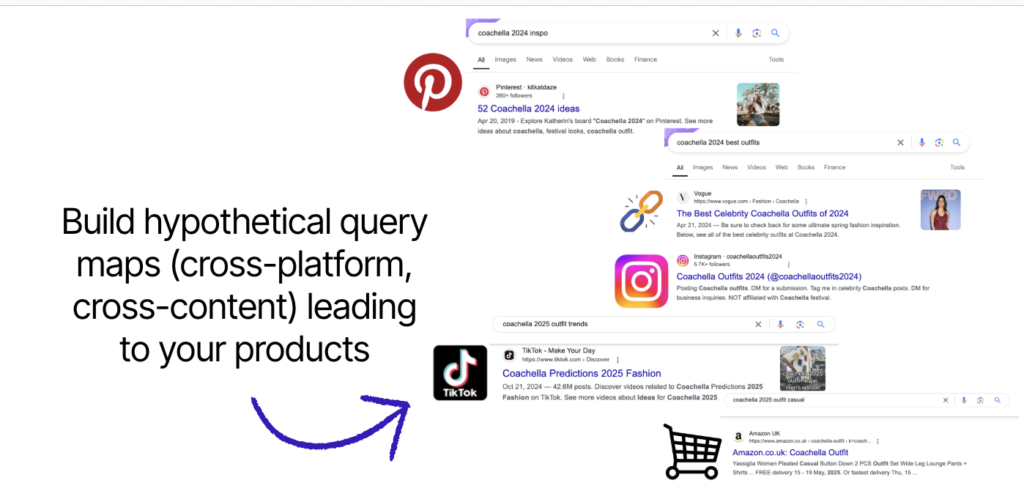
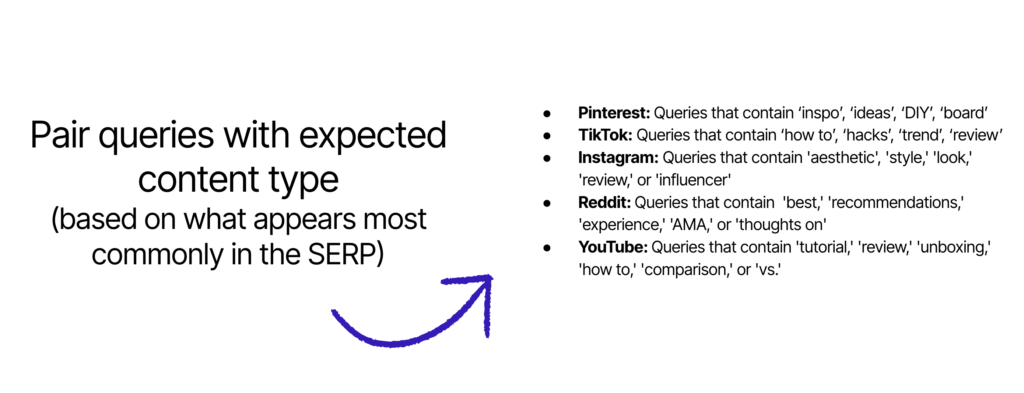
Of course, these are just examples, not universally applicable terms for all niches from these platforms.
Applying query sequence insights in practice
Query sequences and query paths aren’t abstract theories — they’re frameworks for understanding search behaviour at scale. By studying how queries evolve during real sessions, you can:
- Build content clusters that mirror user progression
- Optimise internal linking to reflect logical next steps
- Identify cross-platform opportunities for each stage of discovery
- Structure content in ways that make it citable by AI search systems and LLMs
In practice, this means your keyword research becomes more than a list of terms — it becomes a map of intent evolution.
📚 Deepen your knowledge: Semantic AI-Powered Keyword Research Course
This blog post covers the key concepts from the lesson on Search Query Sequences and Query Path from the Semantic AI-Powered SEO Keyword Research course at the MLforSEO Academy. The course expands on how Google interprets user behaviour across queries and sessions, and how you can leverage that to design smarter, semantic SEO strategies that evolve with your audience.
In the course, besides 10+ hours of video tutorials, you’ll also get access to:
- A Google Colab notebook for fuzzy matching and query distance analysis
- Hands-on labs with DataForSEO for SERP feature scraping
- Step-by-step walkthroughs of entity extraction and n-gram analysis
- Templates for cross-platform query mapping
- …and dozens more templates, workbooks, and scripts for traditional and AI search keyword research
📖 Related glossary terms from MLforSEO
Brush up on the key concepts from this post in the MLforSEO Glossary:
- Query Path — The logical progression of search queries a user performs until they satisfy their intent, across single or multiple sessions.
- Query Sequence — The series or order of related search queries performed within a single search session.
- Query Context — The surrounding signals (session, location, history) that shape how a search engine interprets a query.
- Query Distance — A measure of semantic similarity between two queries, often calculated via fuzzy matching.
- Query Augmentation — The process of expanding or modifying a query to improve search accuracy and relevance.
Recommended additional reading
- Bill Slawski, Search Engines Learn From Search Query Sequences — One of the first analyses of a patent related to sequential queries, published on SEO by the Sea.
- Bill Slawski, Context Clusters in Search Query Suggestions — Explores the role of session context in determining which query suggestions appear.
- Google Patent US9,104,764 — Session-based query suggestions — The technical patent describing how Google identifies sessions from sequential queries and generates follow-up suggestions.

Lazarina Stoy is a Digital Marketing Consultant with expertise in SEO, Machine Learning, and Data Science, and the founder of MLforSEO. Lazarina’s expertise lies in integrating marketing and technology to improve organic visibility strategies and implement process automation.
A University of Strathclyde alumna, her work spans across sectors like B2B, SaaS, and big tech, with notable projects for AWS, Extreme Networks, neo4j, Skyscanner, and other enterprises.
Lazarina champions marketing automation, by creating resources for SEO professionals and speaking at industry events globally on the significance of automation and machine learning in digital marketing. Her contributions to the field are recognized in publications like Search Engine Land, Wix, and Moz, to name a few.
As a mentor on GrowthMentor and a guest lecturer at the University of Strathclyde, Lazarina dedicates her efforts to education and empowerment within the industry.
- Lazarina Stoy.

- Lazarina Stoy.
- Lazarina Stoy.

- Lazarina Stoy.