
Self-paced · Entity SEO for the LLM era

AI Search & LLMs: Entity SEO and Knowledge Graph Strategies for Brands

Search is no longer about matching keywords. It’s about whether AI systems understand who you are, what you do, and why you matter. Learn to design entity-first, knowledge graph-driven SEO systems so your brand is recognised, trusted, and recommended by AI search and LLMs.

  • Certificate of completion
  • Templates, workbooks and checklists
  • Live website masterclass
  • FormatSelf-paced video course
  • Structure9 modules · 51 lessons
  • LevelBeginner
  • CertificateOn completion
Why entities, why now

AI systems don’t match your keywords. They resolve your entity.

LLMs synthesize answers by grounding on entities, not just keywords. If machines can’t tell clearly who you are and what you stand for, they can’t retrieve you, summarize you, or attribute facts to you.

Brands that publish consistent, linked, and verifiable entity data are easier for search engines and LLMs to retrieve and summarize.

What matters now is meaning: the ability to communicate who you are, what you stand for, and how your brand connects to the wider knowledge ecosystem.

This course turns that into a system: translate your brand’s values into structured, data-driven signals, strengthen entity recognition, and weave your brand into knowledge graphs.

Not just discoverable. Meaningful, in a search environment where authority is earned through accuracy, trust, and relevance.

What you'll learn

What you'll take away

Six capabilities for making your brand a well-modelled entity that search engines and AI systems can interpret with confidence.

  • Entity meaning in the LLM era

    How entities differ from keywords, how Google’s systems and knowledge graph process them, and how LLM architectures interpret them.

  • Brand entity development

    Represent your brand consistently across the web, discover recognition gaps, and design an entity architecture LLMs can trust.

  • Reinforcing entity value

    Semantic SEO and advanced schema to model multi-entity relationships and connect content to the right concepts and facts.

  • Knowledge graph integration

    Design, build, implement, and maintain a knowledge graph for your brand, aligned across platforms.

  • Brand authority in LLM responses

    Competitive positioning, cross-platform amplification, and reputation engineering to influence how LLMs talk about your brand.

  • Practical work at scale

    Entity extraction with the Google NLP API and analysis with the Knowledge Graph API, compared against other NLP APIs and generative AI.

How this course is different

Strategy, foundations, and execution in one course

  1. Optional knowledge primers

    Two primers sit alongside the main pathway, one on entities and NER and one on knowledge graphs, so you can catch up or go deeper on the technical foundations without slowing down the strategy.

    Catch up or go deeper
  2. A live website masterclass

    Three over-the-shoulder sessions with Beatrice: a live entity audit of an existing site, live structured-data building with entity relationship mapping, then a walk-through of the workbooks and prioritisation framework.

    From audit to execution
  3. Templates you reuse

    Practical lessons walk you through the Schema Entity Audit Template, the Entity Relationship Planning Workbook, and the Knowledge Graph Foundation Workbook, so you leave with a repeatable system, not just notes.

    Workbooks & checklists
Curriculum

What's inside

A practical, systems-focused journey from understanding entities, to building and optimizing knowledge graphs, to engineering brand authority for AI search and LLMs. Short, focused lessons with concrete examples, mini case studies, and tool-driven exercises.

Introduction & Overview2 lessons
  1. How this course is structured
  2. What you’ll learn
Primer (optional): Entities and Entity Extraction4 lessons

An optional knowledge primer from Lazarina Stoy on Named Entity Recognition, entities vs. keywords and the EAV model, with practical entity extraction in the Google NLP API and a comparison of NLP APIs vs. generative AI.

  1. What is Named Entity Recognition (Entity Extraction) in Semantic Analysis?
  2. Introduction to Entities and the EAV Model
  3. Working with the Google NLP API (Practical)
  4. Bonus Lesson – Comparative Analysis of NLP APIs versus generative AI on entity extraction Free preview
Module 1: Understanding Entity-Based Search in the LLM Era8 lessons

What entities are and why they differ from keywords, how Google’s systems and LLMs process them, and a case study of an entity-based approach you can mirror.

  1. Module 1 Introduction
  2. Entity Importance to Traditional and AI Search – Brief Introduction to Entities and the Knowledge Graph
  3. Interrogating Google’s Knowledge Graph (Manual Practice Example)
  4. Entity Audit Toolkit
  5. How to Audit Entity Structure and What are Appropriate Correction Strategies
  6. Entities in Query-Fan Out Systems, AI Search Systems and LLMs
  7. Entity Website Analysis – Practice Walk Through based on fictional Case Study
  8. Module Outro – Key Takeaways and Resources
Module 2: Brand Entity Development and Recognition11 lessons

Discover recognition gaps, apply the BRIDGE framework, design your entity architecture, model multi-entity schema, and use AI agents for ongoing entity work.

  1. Module 2 Introduction
  2. How to discover entity recognition gaps that prevent LLM discovery – BRIDGE Framework
  3. Entity Blueprint Analysis – Building your entity catalogue
  4. Entity Relationship Mapping
  5. Advanced Schema Markup for multi-entity relationships
  6. Content distribution strategies that amplify entity recognition across platforms
  7. How to grow your entity network by leveraging AI agents
  8. Entity Evaluation and Measurement
  9. Practical: How to use the Schema Entity Audit Template
  10. Practical: How to use the Entity Relationship Planning Workbook
  11. Module Outro – Common pitfalls to avoid, Key Takeaways and Resources
Primer (optional): Introduction to Knowledge Graphs4 lessons

An optional knowledge primer from Lazarina Stoy on how knowledge graphs work, how Google’s Knowledge Graph is built and updated, and the Knowledge Graph API.

  1. Introduction to Knowledge Graphs and Key Elements
  2. How Google’s Knowledge Graph works
  3. Working with the Knowledge Graph API (Practical)
  4. Module Outro – Key Takeaways
Module 3: Knowledge Graph Integration and Optimization9 lessons

Build, implement, deploy and maintain your brand knowledge graph, and align it across platforms.

  1. Module 3 Introduction
  2. Knowledge Graph Fundamentals
  3. Building Your Knowledge Graph
  4. How to Implement your Knowledge Graph – Approaches and Considerations
  5. How to Deploy the Semantic Infrastructure on your Website
  6. Multi-platform Knowledge Graph Alignment
  7. How to maintain your Knowledge Graph
  8. Module Outro – Key Takeaways and Resources
  9. Practical: How to use the Knowledge Graph Foundation Workbook
Module 4: Building Brand Authority for LLM Success7 lessons

Competitive positioning in LLM responses, cross-platform amplification, agent orchestration for citations, and reputation engineering.

  1. Module 4 Introduction and the Key Mistake Teams Make
  2. Competitive LLM Intelligence
  3. How to turn your Knowledge Graph into LLM Citations
  4. Cross-platform entity distribution
  5. What is Co-citation in the context of LLM Reputation Management and How to Approach it Strategically
  6. LLM Citations Monitoring and Maintenance
  7. Module Outro – Key Takeaways and Resources
Masterclass: Applied Brand Entity SEO, From Audit to Execution3 lessons

Three over-the-shoulder sessions with Beatrice on a live website: a live entity audit, live structured-data building with entity relationship mapping, and a walk-through of the workbooks and prioritisation framework.

  1. Live Entity Audit: Diagnosing Gaps and Opportunities
  2. Live Building of Structured data with Entity Relationship Mapping
  3. Putting it all into practice: Workbooks and prioritisation framework walk-through
Wrap-up3 lessons

Optional flashcards and final exam, your certificate, and what’s next.

  1. Quiz Preparation (Core Insights Recap) – Flashcards (Optional)
  2. Final Exam (Optional)
  3. Your certificate and what’s next

The two knowledge primers are optional: they are not required to complete the course. The bonus lesson comparing NLP APIs with generative AI is a free preview.

Is this course a good fit for you?

This course is for you if…

  • You lead or contribute to SEO, content, or digital strategy and want to move beyond keyword-first tactics.
  • You work in-house or agency-side and need to future-proof brand visibility in AI search and LLMs.
  • You’re a technical SEO or data-driven marketer who wants to use NLP, schema, and knowledge graphs more systematically.
  • You want a repeatable system for auditing entity recognition, structuring your brand as an entity, and connecting content into a knowledge graph.

It might not be for you if…

  • You want quick keyword tactics rather than an entity-first system.
  • You’re looking for a hands-off overview with no audits, templates, or implementation.
  • You only care about classic rankings and not how AI search and LLMs describe your brand.
You keep everything

What you'll walk away with

Templates, workbooks, and guides from the MLforSEO resource library that come with the course, so you can audit, plan, and ship on your own site.

  • Schema Entity Audit Template SHEETS

    Evaluate structured data quality across seven entity categories with a five-point scoring system.

  • Entity Relationship Planning Workbook SHEETS

    Map entity relationships, define permanent @id URL patterns, and validate connections before you deploy schema.

  • Knowledge Graph Foundation – Step 1 Template SHEETS

    Turn your entity inventory into a prioritised, phased knowledge graph deployment roadmap.

  • Knowledge Graph Implementation Guide DOCX

    Step 2 technical setup: copy-paste JSON-LD entities, config templates, CMS snippets, and a week-by-week rollout plan.

  • LLM Citation Tracking: 4 Step Implementation Guide DOCX

    Turn “are we mentioned?” checks into an auditable weekly measurement system, with a prompt bank and scoring rubric.

Your instructors

Taught by practitioners

Beatrice Gamba
LEAD INSTRUCTOR

Beatrice Gamba

Head of Innovation · WordLift

Beatrice Gamba is Head of Innovation at WordLift, working at the intersection of SEO, semantic web technologies, and digital transformation. She leads the development of knowledge graph solutions that make content accessible to intelligent agents and large language models.

With over a decade in digital strategy, she helps global brands, including Fortune 500 companies, major editorial groups, and large e-commerce platforms, structure their information so search engines and AI systems can understand, trust, and surface it.

Focus areas
  • Entity-based SEO
  • Knowledge graphs
  • Structured data
  • Agentic search
  • LLM optimization
Speaker at
  • Knowledge Graph Conference (NYC)
  • Connected Data London
Full profile
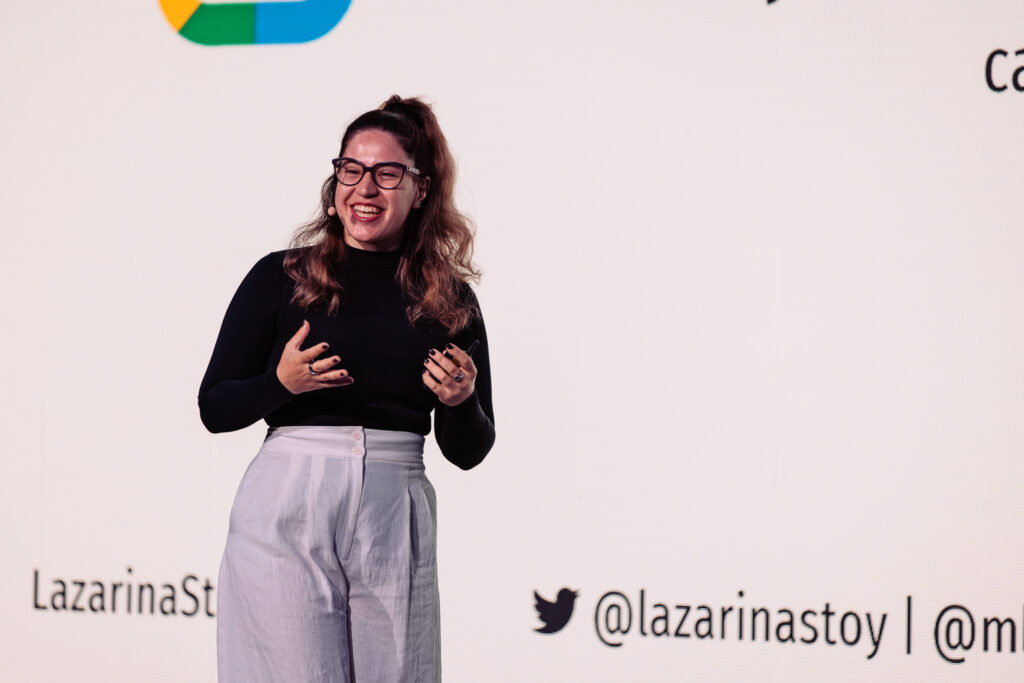
Lazarina Stoy
GUEST INSTRUCTOR

Lazarina Stoy

Guest contributor · Founder of MLforSEO

Founder of MLforSEO and an ML/SEO consultant who has applied machine learning to SEO at AWS, Skyscanner, and Extreme Networks. She contributes the ML and automation perspective to the course, including the two optional knowledge primers on entity extraction and knowledge graphs.

Focus areas
  • Entity extraction (NER)
  • Knowledge graphs
  • Machine learning for SEO
Full profile
From students

What learners say

  • Beatrice delivered a masterclass for both traditional and modern entity SEO.

    Verified student

  • It is one of the best courses I have ever taken, without a doubt. It is a topic that is rarely discussed openly in the SEO community.

    MJ Cachón · Founder, LAIKA

  • Being able to systematically audit entity recognition, structure brand entities with proper schema, and influence how LLMs surface your brand—that’s exactly what we need right now. The balance between theory and practice is spot-on.

    Jasmita D’Souza · SEO Automations Consultant

  • I was a bit worried at the start about how technical all the lessons would be, but as it turns out, they were easy to follow from start to end.

    Sarah Carvalho

  • It helped me deepen my understanding of Entity SEO and develop a clearer, more strategic approach to working with entities and knowledge graphs.

    María Hormaechea · Verified owner

Questions

Frequently asked questions

What is this course about, and what will I be able to do after it?

How entity-based search and brand knowledge graphs power modern discovery across Google, AI Overviews, and LLM-driven answer engines. By the end you’ll be able to design an entity-first SEO strategy, stand up a practical knowledge graph, and ship experiments that improve visibility in AI search experiences.

Who teaches the course?

Beatrice Gamba, Head of Innovation at WordLift, created and leads the course. Lazarina Stoy, founder of MLforSEO, joins as guest contributor and teaches the two optional knowledge primers.

Do I need any prerequisites or a technical background?

No advanced background is required. Implementation stays practical, with clear examples, templates, and checklists that brand, content, and SEO teams can adopt quickly. If you need the technical foundations, the optional primers on entities/NER and knowledge graphs cover them.

What is a brand knowledge graph, and why does it matter?

A knowledge graph is a network of your most important entities (brand, products, people, places, offers) and their relationships. It aligns content, metadata, and identifiers so search engines and LLMs can resolve what your pages are about and confidently attribute facts to you.

Which schemas and identifiers does it cover?

Practical schema.org patterns for brands and products, organization and author identity, and how to use persistent IDs and sameAs links. You’ll map site sections to entity types and learn QA checks that prevent drift across locales.

How do I measure impact from entity SEO and knowledge graphs?

Track entity coverage, brand and identity consistency, rich result eligibility, non-brand discovery, answer-engine visibility, and assisted conversions. The course shows a pragmatic roadmap for testing hypotheses and attributing wins to graph-backed changes.

How much does it cost?

€200, one-time. Prices exclude VAT; VAT is added for EU individuals, calculated at checkout. The course is also available in bundles with other MLforSEO courses.

When do I get access, and how long does it take?

Access is provisioned as soon as payment completes, and you can start right away from your Academy dashboard. The course is on-demand and self-paced, with no time limit for completion.

Can I get an invoice or buy seats for my team?

Yes. Enter your billing details (including VAT/Tax ID where applicable) at checkout and an invoice is issued automatically. For multiple seats or centralised invoicing, reply to your order email and we’ll set up bulk checkout.

Keep going

More courses from MLforSEO Academy

  • Lazarina Stoy

    FOUNDATIONSZERO TO HERO

    Introduction to Machine Learning for SEO

    Go from zero to running your first ML workflows for SEO: classification, clustering, entity extraction, fuzzy matching and content transformation.

    34 lessons · Beginner€250
    View course
  • Lazarina Stoy

    KEYWORD RESEARCHSEMANTIC SEO

    Semantic AI-powered SEO Keyword Research Course

    Build a semantic keyword universe and an automated content-brief workflow, from query understanding through SERP analysis to delivery.

    34 lessons · Intermediate€400
    View course
  • Beatrice Gamba

    AGENTIC SEOAI SEARCH

    AI Search Optimization & Agentic SEO

    Optimize for the AI agents that browse, decide, and act on your behalf. Make your brand findable, trustworthy, and actionable to the systems mediating discovery, and measure influence when rankings stop telling the whole story.

    14 lessons · Intermediate€400
    View course

All courses