
Self-paced · Agentic SEO for the AI-search era

AI Search Optimization & Agentic SEO

Search agents now browse, decide, and act on your behalf: decomposing tasks, choosing sources, and completing steps without a person clicking a link. Learn to make your brand findable, trustworthy, and actionable to the agents mediating discovery, not just the people behind them.

  • Lifetime access
  • Certificate of completion
  • Hands-on workbooks and audits
  • FormatSelf-paced video course
  • Structure5 modules · 14 lessons
  • Video~6 hours
  • LevelIntermediate
  • CertificateOn completion
  • AccessLifetime
The shift nobody prepared you for

You’re optimizing for rankings. Agents don’t rank. They act.

Traditional SEO assumes a person types a query, scans a list, and clicks a page. Agentic search breaks every step of that assumption.

An agent decomposes the task, fans out queries, retrieves fragments from many sources, and increasingly takes action: comparing, deciding, even transacting, often with no page view anywhere in sight.

You can hold position one and still never be retrieved, cited, or chosen. Visibility no longer guarantees inclusion, inclusion no longer guarantees use, and being read no longer guarantees being acted on.

The work now is being legible and actionable to the systems that mediate discovery: structured enough to be understood, modular enough to be reused, and trustworthy enough to be picked.

When an agent, not a person, is deciding and acting, what makes your brand the one it reaches for?

What you'll learn

What you'll take away

Six practical capabilities that move you from ranking-centric SEO to optimizing for agents that browse, decide, and act.

  • How agentic search actually works

    Queries vs. tasks vs. objectives, query fan-out, and why agents evaluate content outside page-level context.

  • Intelligent agents in SEO workflows

    What qualifies as an agent, how memory, tools and feedback loops shape outcomes, and where agents bypass retrieval.

  • What agentic SEO means in practice

    How optimization targets shift from pages and rankings to being retrieved, chosen, and acted on.

  • Knowledge graphs & structured data for agents

    How entities differ from documents, and how structured relationships reduce ambiguity so agents can reason and reuse.

  • Your audience is no longer only human

    The three agent modes, building a non-human ICP, and structured data as a machine-readable contract that lets agents act.

  • Measuring influence, not just traffic

    Read the alternative signals of presence and influence in agent-mediated search when rankings and clicks fall short.

How this course is different

Not another “AI SEO” overview. A build-it-yourself system.

  1. Optimize for the systems, not the SERP

    Most SEO training ends at the ranked list. This one starts where discovery actually happens now: inside retrieval, decision, and action, so agents can find, trust, and act on your content.

    Agent-mediated discovery & action
  2. Practical exercises & a workbook on most lessons

    Most lessons pair the concept with a hands-on exercise and a downloadable workbook: audits, roadmaps, and action sheets you run on your own site. You leave with a toolkit, not just notes.

    Do the work, not just watch
  3. Grounded in real agentic workflows

    No toy examples. Knowledge-graph-aware and schema-first, with contextual examples worked end to end, in the same messy conditions you’ll face on a live site.

    Real data & worked examples
Curriculum

What's inside

A systems-focused path from what agentic search is, through the technical foundations agents rely on, to advanced agentic SEO strategy and how to keep up as the landscape shifts.

Module 0: Introduction & Overview2 lessons
  1. 0.1 Course Introduction and What We’ll Cover Free preview
    • What “agentic search” means in this course, and what is explicitly out of scope
    • The search systems, agents, and decision processes the course focuses on
    • What you’ll be able to do differently by the end
  2. 0.2 Why Traditional SEO Isn’t Enough
    • Why traditional SEO is optimized for the wrong outcome in an agentic context
    • Four traditional assumptions that no longer hold, from “ranking predicts value” to “the page is the optimization unit”
    • Visibility to humans vs. selection by systems, and why rank tracking is the wrong instrument
    • Where the human decision point sits in traditional vs. agentic search flows
Module 1: The Agentic Search Transformation3 lessons
  1. 1.1 How Agentic and AI Search Works
    • Queries vs. tasks vs. objectives, and why systems optimize for inferred intent
    • Query decomposition: how complex requests become sub-tasks with different sources
    • The five-stage retrieval pipeline and what gets eliminated at each stage
    • Why the evaluation unit shifts from the page to the individual claim
  2. 1.2 Intelligent Agents in SEO Workflows
    • The five traits that qualify a system as an agent: autonomy, goal-directed behavior, tool use, state persistence, adaptability
    • The REAC framework (Retrieve, Evaluate, Act, Combine)
    • How agents formulate sub-queries, evaluate sources, and synthesize an answer
    • Where SEO work actually connects to agent selection
  3. 1.3 What Agentic Search Means in Practice
    • From assisted retrieval to agent-mediated selection, and where decision authority sits
    • Why unique claims beat higher rankings in multi-source synthesis
    • The three sentence-level properties of selected content: extract-friendly, verifiable, specific
    • A 30-day action plan: content audit, entity fixing, extractability work, and testing
Module 2: Technical Foundation for Agent Search4 lessons
  1. 2.1 Knowledge Graphs and Infrastructure for Intelligent Agents
    • Why agent traffic fails silently when a page doesn’t fit an agent’s context window
    • How agents read in tokens, not pages, and how to budget them per page
    • llms.txt, skill.md, and robots.txt for AI crawlers
    • Structuring content for sequential agent reading
  2. 2.2 Language Model Visibility Fundamentals
    • Why AI visibility is binary: cited or invisible
    • Measuring your citation rate across ChatGPT, Claude, Perplexity, and Gemini
    • The four factors that drive citation probability
    • Ranking (traffic) vs. reuse (extraction), plus a diagnostic sequence and 4-week roadmap
  3. 2.3 Structured Data for Automated Systems
    • Why consistency beats volume, and the canonical-name problem
    • Why JavaScript-injected schema is invisible to direct-access agents
    • The three fields that do the interpretive work: @id, sameAs, and a classifying description
    • Five common implementation errors and a 30-minute organization-schema audit
  4. 2.4 Trust, Authority, and Machine Confidence
    • Why there’s no schema property for trust: credibility is inferred from coherence and corroboration
    • Structural, corroboration, and behavioral signals
    • How self-contradictions downgrade every affected attribute
    • Why rebrands and migrations rupture entity confidence, and a phased recovery playbook
Module 3: Advanced Agentic SEO Strategies4 lessons
  1. 3.1 Designing Content for Retrieval and Synthesis
    • The page is read by humans; the chunk is retrieved by machines
    • The four-stage RAG pipeline and the failure mode at each stage
    • Why headings are a retrieval signal and attribution must be inline
    • The four-part “proposition” structure and a 5-check extraction-readiness audit
  2. 3.2 Measuring Performance in Agent-Mediated Search
    • Why rankings and traffic are the wrong scorecard for agent-mediated search
    • How AI influence hides in the direct channel, and how to surface it
    • Seven upstream proxy signals of AI visibility and citation quality scoring
    • A weekly/monthly/quarterly measurement stack and a four-tier scorecard
  3. 3.3 How Systems Narrow Choices
    • The four-stage narrowing pipeline: early filtering, re-ranking, late evaluation, final response
    • Early-filter failure patterns and how to fix them
    • Late evaluation’s four tests: self-containment, attributability, consistency, additive value
    • A diagnostic that maps your citation signal to the failure point and first fix
  4. 3.4 Your Audience Is No Longer Only Human
    • The three operations an agent performs (query, verify, decide) and the three agent types: research, recommendation, action
    • Building a non-human ICP with a four-dimension framework
    • Entity URIs, disambiguation, and why schema defines what NLP only comprehends
    • The action layer and the three-layer agent-readiness stack (entity → attribute → action)
Module 4: Key Takeaways and Developments1 lesson
  1. 4.0 Course Takeaways
    • What stays stable across systems, model generations, and interface changes
    • A four-question filter for evaluating any new AI-search tool or claim
    • Telling interface changes apart from architectural ones that actually matter
    • Decision rules for optimization choices as the space keeps shifting

Lesson 0.1 is a free preview: watch it before you enrol. Most lessons ship with a downloadable workbook you run on your own site.

Is this course a good fit for you?

This course is for you if…

  • You already do SEO and can feel the ground shifting under ranking-based thinking.
  • You want to understand how AI-search agents retrieve, decide, and act, not just prompt them.
  • You want practical, workbook-driven workflows over theory.
  • You’re ready to optimize for entities, retrieval, reuse, and action instead of positions.
  • You want to measure influence when rankings and traffic stop telling the whole story.

It might not be for you if…

  • You’re looking for a prompt-engineering or “ChatGPT hacks” course.
  • You believe traditional ranking tactics are all you’ll ever need.
  • You want a purely conceptual overview with no hands-on work.
  • You’re brand new to SEO and want a beginner primer before anything agentic.
You keep everything

What you'll walk away with

Not just lessons. Eight workbooks, audits, and roadmaps from the MLforSEO resource library, unlocked with the course, that you run on your own site.

  • Agent Readiness Stack Audit SHEETS

    Audit your site across the full agent-readiness stack, for the autonomous agents that read, evaluate and act on your pages.

  • Extraction Readiness Audit DOCX

    Five checks, under ten minutes, to tell whether a page is actually extraction-ready for AI search.

  • 30-Day Agent Search Optimization Action Plan SHEETS

    Diagnose and fix your site over 30 days: content audit, entity fixing, extractability, and testing.

  • Language Model Visibility: 4-Week Implementation Roadmap SHEETS

    A time-boxed plan to move content from invisible to frequently cited across ChatGPT, Claude, Perplexity, and Gemini.

  • 7 Alternative Signals of AI Influence DOCX

    Surface your AI visibility weeks before it shows up in traffic: seven proxy signals with exact steps.

  • Late-Evaluation Rewrite Checklist SHEETS

    Rewrite content so chunks survive the generator’s final read, section by section.

Your instructor

Taught by a practitioner

Beatrice Gamba
LEAD INSTRUCTOR

Beatrice Gamba

Head of Innovation · WordLift

Beatrice Gamba is Head of Innovation at WordLift, working at the intersection of SEO, semantic web technologies, and digital transformation. She leads the development of knowledge graph solutions that make content accessible to intelligent agents and large language models.

With over a decade in digital strategy, she helps global brands, including Fortune 500 companies, major editorial groups, and large e-commerce platforms, structure their information so search engines and AI systems can understand, trust, and surface it. Her focus: entity optimization, LLM citation, and agentic SEO, translated into frameworks teams can actually adopt.

Focus areas
  • Entity-based SEO
  • Knowledge graphs
  • Structured data
  • Agentic search
  • LLM optimization
Speaker at
  • Knowledge Graph Conference (NYC)
  • Connected Data London
Full profile
From students

What learners say

  • This course really delivers! What stood out most to me is how solid the whole structure is: topics are well explained, properly contextualized, and each one builds naturally on the last, so nothing feels bolted on. It moves past the SEO vs GEO debate and gives an actual model of how retrieval, filtering and citation work, not just tips. Beatrice is very clear throughout, and the materials she put together, the agent-readiness stack, the extraction-readiness audit, the checklists, are genuinely practical.

    Michele Mazzali · Verified owner

Enrolment

Start today

€400

One payment · instant access on MLforSEO Academy

Enrol now

Prices exclude VAT. VAT is added for EU individuals. Checkout and lessons are on academy.mlforseo.com.

Questions

Frequently asked questions

What is this course about, and what will I be able to do after it?

It’s about agentic SEO: optimizing for AI-search agents that decompose tasks, retrieve fragments, decide, and increasingly act, not just for a human scanning a ranked list. By the end you’ll be able to audit your site for agent-readiness, design content for retrieval, reuse, and action, and measure presence in agent-mediated search rather than relying on rankings alone.

How is agentic SEO different from traditional SEO and AI search?

Traditional SEO optimizes for a ranked list a person scans and clicks. AI search adds systems that synthesize answers. Agentic search goes one step further: agents break a task into sub-questions, choose sources, and often complete the action themselves, comparing, deciding, even transacting. Optimization shifts from ranking pages to being retrievable, trustworthy, and actionable to those agents.

Do I need any prerequisites?

No prerequisites are required. Having taken AI Search & LLMs: Entity SEO and Knowledge Graph Strategies for Brands is an advantage: it helps you set up your website’s content and schema architecture and internal knowledge graph, which this course builds on for agentic optimization.

Do I need developer or data-science skills?

No. It’s built for marketers and SEOs, not engineers. You’ll meet the real mechanisms (chunking, entities, structured data), always explained from a practitioner’s chair, with worked examples. No coding required. Existing SEO experience helps.

How much time does it take, and how is it delivered?

It’s on-demand and self-paced, with no fixed schedule and no time limit. Total video length is around 6 hours. Every lesson is video, transcript and slides, and most add a workbook and practical exercises, so working through everything takes longer than the videos alone.

When do I get access, and for how long?

Immediately. All materials unlock the moment you enrol. Access is lifetime, including all future updates.

How much does it cost?

€400, one-time. Prices exclude VAT; VAT is added for EU individuals, calculated at checkout. Already an Academy student? Use code Community30 at checkout for 30% off.

Will it go out of date?

The tactics-of-the-week will; this doesn’t. It’s built on durable mechanics (verifiability, entity clarity, structural coherence) that don’t change with each model release. Every future update is included.

Can I get an invoice or buy seats for my team?

Yes. Enter your billing details (including VAT/Tax ID where applicable) at checkout and an invoice is issued automatically. For multiple seats or centralised invoicing, reply to your order email and we’ll set up bulk checkout.

Do you offer refunds?

Because the full course and all downloadable materials unlock immediately on purchase, sales are final. If something isn’t working or you were charged in error, reply to your order email and we’ll make it right.

Keep going

More courses from MLforSEO Academy

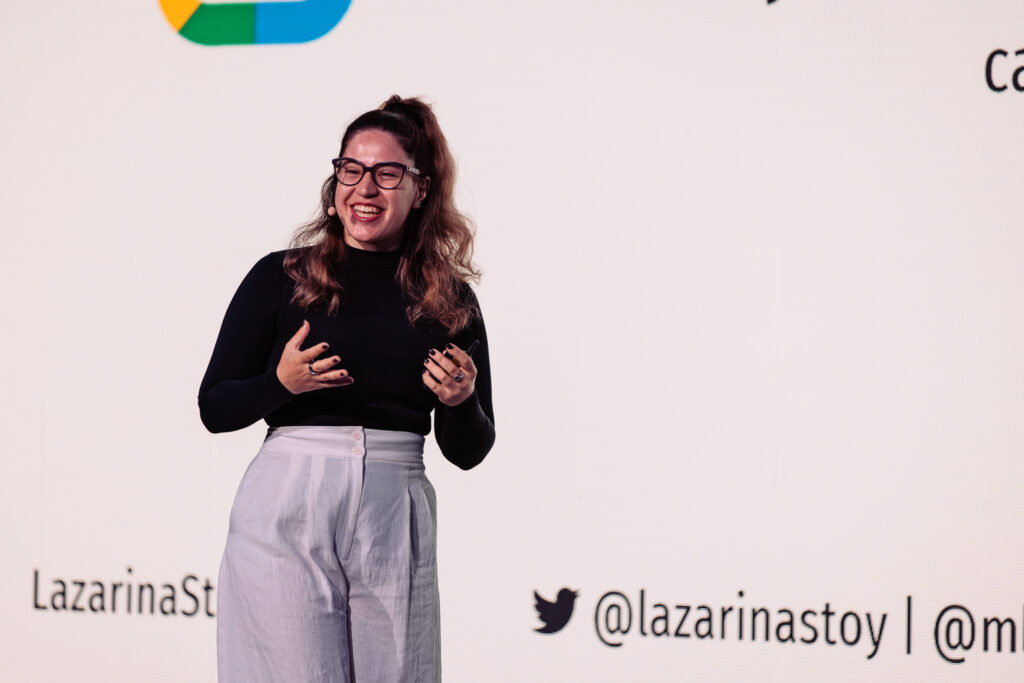
  • Lazarina Stoy

    FOUNDATIONSZERO TO HERO

    Introduction to Machine Learning for SEO

    Go from zero to running your first ML workflows for SEO: classification, clustering, entity extraction, fuzzy matching and content transformation.

    34 lessons · Beginner€250
    View course
  • Lazarina Stoy

    KEYWORD RESEARCHSEMANTIC SEO

    Semantic AI-powered SEO Keyword Research Course

    Build a semantic keyword universe and an automated content-brief workflow, from query understanding through SERP analysis to delivery.

    34 lessons · Intermediate€400
    View course
  • Beatrice Gamba

    ENTITY SEOKNOWLEDGE GRAPHS

    AI Search & LLMs: Entity SEO and Knowledge Graph Strategies for Brands

    Win in both traditional Google and LLM-driven search by mastering entities, brand recognition, and knowledge graph integration.

    51 lessons · Beginner€200
    View course

All courses