Self-paced · Keyword research

Semantic AI-powered SEO Keyword Research

Move beyond keyword lists. Learn how search engines process queries through entities, intent, context and knowledge graphs, then build a semantic keyword universe with ML APIs, practical scripts and automated content briefs.

  • 15+ hours of video lessons
  • 20+ scripts, templates and datasets
  • Certificate of completion
  • FormatSelf-paced video course
  • Structure11 modules · 34 lessons
  • Video15+ hours
  • LevelIntermediate
  • CertificateOn completion
  • AccessLifetime
The problem

Traditional keyword research is no longer enough

Traditional keyword research centres on targeting, density and difficulty scores. It gives you keywords to put on a page. It says little about why people search, what they already know, which format they expect, or how one query leads to the next.

Search engines work with entities, query context, session behaviour and knowledge graphs. AI search systems go further, expanding, transforming and synthesising queries behind the scenes. Your research has to account for the same things, and machine learning makes that work manageable at scale.

Semantic keyword research starts from the user’s search journey, not the keyword.

What you'll learn

From query semantics to a working keyword universe

Each concept is explained through how search engines actually process queries, then put to work with tools and scripts.

  • Entities and the EAV model

    Break queries into entities, attributes and variables, and extract entities at scale with the Google Natural Language API.

  • Query paths and query understanding

    Uncover query paths with Google’s Autocomplete API, and learn how query augmentation, query context and session context shape results.

  • SERP analysis with data

    Collect SERPs programmatically with DataForSEO and identify the content formats and platforms Google serves for a query.

  • Search intent classification

    Classify explicit intent with rule-based and ML-enabled methods, and account for the implicit intent behind a search.

  • Knowledge graphs and information gain

    See how Google uses entities and its Knowledge Graph, through patent analysis, and what information gain means for your content.

  • A semantic keyword universe, end to end

    Gather the data, organise and categorise it, present it to clients, and automate content briefs from it.

How this course is different

Theory you can act on

  1. Grounded in how search works

    Dozens of query-semantics concepts are demystified, and numerous Google patents are covered in a practical way, with exercises and process improvements along the way.

    Patents, made practical
  2. Labs with real APIs

    Work with the Google Natural Language, Autocomplete and Knowledge Graph APIs and DataForSEO, using beginner-friendly scripts and step-by-step walkthroughs.

    Hands-on labs
  3. Ready for AI search

    Two bonus modules cover synthetic queries and query fan-out in AI search, and entity-based brand authority in the LLM era with guest contributor Beatrice Gamba of WordLift.

    Bonus modules
Curriculum

What's inside

Eleven modules, from the fundamentals of query semantics to a finished, client-ready keyword universe, plus two bonus modules on search in the AI era.

Module 1: Introduction & Overview2 lessons

Why traditional keyword research is no longer enough, who the course is for and how it is structured.

  1. 1.1 Traditional Vs Semantic Keyword Research (& why traditional is no longer enough) Free preview
  2. 1.2 Who this course is for and what we'll cover Free preview
Module 2: Fundamentals of Semantic Keyword Research4 lessons

Entities, NER, the Entity-Attribute-Variable (EAV) model, entity linking, query sequences and query paths, with labs on the Google Natural Language API and Google’s Autocomplete API.

  1. 2.1 Entities, Entity Attributes, Entity Attribute Variables (EAV Model) Free preview
  2. 2.2 Practical/Lab Query Entity Extraction with Google NLP and Entity ML-enabled data analysis Free preview
  3. 2.3 Search Query Sequences and Query Path Free preview
  4. 2.4 Practical/Lab – How to work with Google's Autocomplete API to uncover Google-suggested query paths Free preview
Module 3: Query Understanding and Analysis3 lessons

How queries are reformulated, how query and session context shape results, and how Google reads implicit user feedback and search behaviour.

  1. 3.1 Query Augmentation Free preview
  2. 3.2 Query Context and Session Context Free preview
  3. 3.3 Implicit User Feedback and User Search Behaviour Free preview
Module 4: Understanding the SERP – Theory and practice3 lessons

SERP feature analysis as a way to choose a content angle, with labs on SERP collection with DataForSEO and identifying the content formats and platforms Google serves.

  1. 4.1 SERP Feature Analysis Free preview
  2. 4.2 Practical/Lab – How to work with dataforSEO for SERP collection Free preview
  3. 4.3 Practical/Lab – How to identify desired content formats and platforms served from SERP data Free preview
Module 5: Search Intent – Theory and Practice2 lessons

Search intent beyond the words in the query, and practical methods for explicit intent classification, rule-based and ML-enabled.

  1. 5.1 Search Intent Free preview
  2. 5.2 Practical/Lab – Methods for explicit search intent classification Free preview
Module 6: Advanced Semantic Keyword Analysis Concepts3 lessons

Knowledge graphs, information gain, and how Google uses entities and the Knowledge Graph in retrieval and ranking, through patent analysis.

  1. 6.1 Knowledge Graphs Free preview
  2. 6.2 Information Gain Free preview
  3. 6.3 How Google Uses Entities and the Knowledge graph (Patents) Free preview
Module 7: Building a semantic keyword universe – Start to Finish4 lessons

Building a semantic keyword universe from start to finish: data sources, organising and categorising your research, a transition checklist, and how to maintain and present it to clients.

  1. 7.1 Getting your data – data sources run-through Free preview
  2. 7.2 Organising your database and keyword categorisation Free preview
  3. 7.3 How to move from traditional to semantic keyword universe – Checklist, based on course tasks Free preview
  4. 7.4 What a good semantic keyword universe looks like Free preview
Module 8: Integrating Semantic Keyword Research Into Projects2 lessons

Integrating your research into SEO and marketing projects, with low- and no-code automation for content briefs.

  1. 8.1 How to integrate semantic keyword research into real-world projects Free preview
  2. 8.2 Practical/Lab – How to Automate Content Briefs from your Keyword Universe Free preview
Module 9: Entity-based Brand Authority Building in the LLM Era (Bonus Module)5 lessons

Bonus module by Beatrice Gamba, Head of Innovation at WordLift: how entity-based search changes brand understanding in the LLM era, and how to turn brand values into structured signals search engines and AI systems can interpret.

  1. 9.1 Module Overview: Entity-based Search and Brand Authority Building in the LLM Era Free preview
  2. 9.2 Understanding Entity-Based Search in the LLM Era
  3. 9.3 Brand Entity Development and Recognition
  4. 9.4 Knowledge Graph Integration and Optimization
  5. 9.5 Building Brand Authority for LLM Success
Module 10: Queries in the AI Era (Bonus Module)4 lessons

Bonus module on how AI search platforms such as Google’s AI Mode, Perplexity and ChatGPT Search expand, transform and synthesise queries: synthetic queries, query fan-out, and how to adapt your research.

  1. 10.1 Module Overview
  2. 10.2 What are synthetic queries?
  3. 10.3 Practical: How to distinguish between synthetic vs user-initiated queries in the AI era
  4. 10.4 Query Fan Out in AI Mode and Other AI Search Systems
Module 11: Key Takeaways & What's Next2 lessons

A recap of everything covered and where to go next.

  1. 11.1 Course Takeaways Free preview
  2. 11.2 What's next Free preview

Lessons marked Preview are free to watch on the academy before you enrol.

Is this course a good fit for you?

This course is for you if…

  • SEO specialists and leads who want entity-first, intent-aware research and to scale briefs and audits with repeatable, data-driven methods.
  • Content and editorial teams who want to plan formats and platforms that match SERP expectations.
  • Data-savvy marketers and analysts who want to use APIs and practical scripts to turn noisy keyword data into semantic clusters and actions.
  • Agencies and in-house teams building scalable research systems for multiple markets and languages.
  • Consultants and freelancers who want to differentiate with semantic strategy and ML-enabled automation.

It might not be for you if…

  • You want a keyword list handed to you rather than a method for building your own keyword universe.
  • You want the ML foundations first. Start with Introduction to Machine Learning for SEO.
You keep everything

What you'll walk away with

The labs come with the scripts, templates and checklists to run them yourself. A selection from the 20+ resources in the course:

  • Multi-Platform Autocomplete Keyword Research with Google Search, YouTube and Places APIs COLAB

    Pull Google-suggested query paths from three autocomplete sources.

  • Knowledge Graph API Extraction and Entity Relationship Analysis COLAB

    Query Google’s Knowledge Graph and analyse entity relationships for your keyword set.

  • Identifying Desired Content Formats & Platforms from SERP Data COLAB

    The lab notebook for reading formats and platforms from SERP data.

  • Semantic Search Intent Classification with Google Cloud NLP & spaCy COLAB

    Classify search intent in Python with Google Cloud NLP and spaCy.

  • Transitioning from Traditional to Semantic Keyword Universe (Checklist) SHEETS

    The checklist, based on the course tasks, for moving to a semantic keyword universe.

  • Comprehensive Content Brief Template with Data Source Mapping DOCX

    A content brief template that maps each section to its data source.

Your instructor

Taught by a practitioner

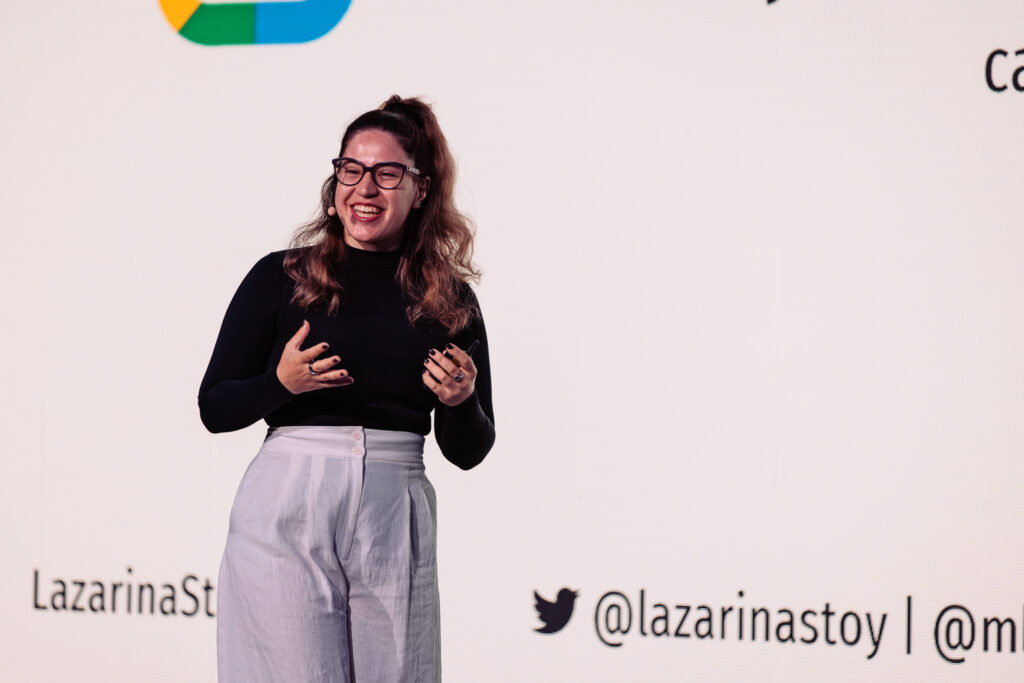
Lazarina Stoy
LEAD INSTRUCTOR

Lazarina Stoy

Founder of MLforSEO · ML/SEO consultant

Lazarina Stoy is a marketing and machine learning consultant, trainer and speaker, and the founder of MLforSEO, a training platform and community that helps organic search marketers put machine learning to work in their day-to-day. Over more than a decade in digital marketing and data, she has become known for a practical, sustainable and scalable approach to applying AI and ML to SEO.

Through agency work she has partnered with enterprise organisations including AWS, Skyscanner, Compass and Extreme Networks, often using machine learning to execute ambitious strategies at scale. She built MLforSEO to onboard marketers into AI/ML without the hype, the gatekeeping or the prompt-pack shortcuts. Her work has appeared in Search Engine Land and Moz.

Focus areas
  • Machine Learning for SEO
  • AI Search
  • Technical SEO Automation
  • AI Content Engineering
  • Data Platform & MLOps
  • Measurement, Experimentation & Attribution
Speaker at
  • BrightonSEO
  • TechSEO Connect
  • Pubcon
  • WTSFest
Full profile
From students

What learners say

  • One of the best courses I've bought and is helping me stay relevant as an SEO. There's crazy amounts of value, and Lazarina shares a ton of info.

    Vinnie Wong · Head of Organic Growth

  • A fantastic course that equips you with all the tools to become a 'trendsetter' when developing your SEO strategies. Lazarina is, as always, extremely knowledgeable and provides clear explanations for complex concepts.

    Sarah Carvalho

Enrolment

Start today

€400

One payment · instant access on MLforSEO Academy

Enrol now

Prices exclude VAT. VAT is added for EU individuals. Checkout and lessons are on academy.mlforseo.com.

Questions

Frequently asked questions

What do I need to know before I start?

The scripts and tools are made as beginner-friendly as possible, with in-depth step-by-step explanations and walkthroughs. If you are new to machine learning, Introduction to Machine Learning for SEO covers the foundations.

How much does it cost, and is VAT included?

The course is €400. Prices exclude VAT; VAT is added for EU individuals. Taxes are calculated from your billing country and shown at checkout. If you have a valid VAT/Tax ID, enter it at checkout for the correct treatment. It is also part of the 3-course bundle and the 2-course bundle with Entity SEO & Knowledge Graph Strategies.

How long do I have access?

The course is self-paced and on-demand, with lifetime access and no time limit for completion. Access is provisioned as soon as your payment completes, and you can start from your Academy dashboard straight away.

Do I get a certificate?

Yes. MLforSEO Academy provides a certificate of completion for each course you finish.

Can I buy seats for my team or get an invoice?

Yes. An invoice is issued automatically at checkout with your billing details. For multiple seats, bulk checkout or centralised invoicing, reply to your order email with the number of seats you need.

What is the shift from traditional to semantic keyword research?

Traditional research focuses on keyword targeting, density and difficulty. Semantic research centres on the user’s whole search journey: the intent behind a query, the expected format and platform, how queries connect, what the user already knows, and your brand’s ability to produce relevant content across platforms.

What is information gain, and why does it matter?

Information gain is a score for how much new, useful information a page offers to someone who has already seen other content on the topic. Google uses it to prioritise documents with novel insights. For content teams, that means proprietary insight, regular updates, expert input and filling real gaps, not repeating what already ranks.

Which data sources does the course use?

Google Search Console, business and organic competitors’ keywords, content gap analysis, People Also Ask and autocomplete, trending keywords, first-party research such as interviews, surveys and chat transcripts, and SERP analysis. You then categorise by intent, entities, topics, SERP features, content type and more.

Does it cover AI search?

Yes. The bonus module Queries in the AI Era covers synthetic queries, query fan-out in Google’s AI Mode and other AI search systems, and how to adapt your keyword research. A second bonus module by Beatrice Gamba covers entity-based brand authority in the LLM era.

Keep going

More courses from MLforSEO Academy

  • Lazarina Stoy

    FOUNDATIONSZERO TO HERO

    Introduction to Machine Learning for SEO

    Go from zero to running your first ML workflows for SEO: classification, clustering, entity extraction, fuzzy matching and content transformation.

    34 lessons · Beginner€250
    View course
  • Beatrice Gamba

    AGENTIC SEOAI SEARCH

    AI Search Optimization & Agentic SEO

    Optimize for the AI agents that browse, decide, and act on your behalf. Make your brand findable, trustworthy, and actionable to the systems mediating discovery, and measure influence when rankings stop telling the whole story.

    14 lessons · Intermediate€400
    View course
  • Beatrice Gamba

    ENTITY SEOKNOWLEDGE GRAPHS

    AI Search & LLMs: Entity SEO and Knowledge Graph Strategies for Brands

    Win in both traditional Google and LLM-driven search by mastering entities, brand recognition, and knowledge graph integration.

    51 lessons · Beginner€200
    View course

All courses